
Case Study #1: Eric Jury — When Debt Turns a Business Problem Into a Personal Problem
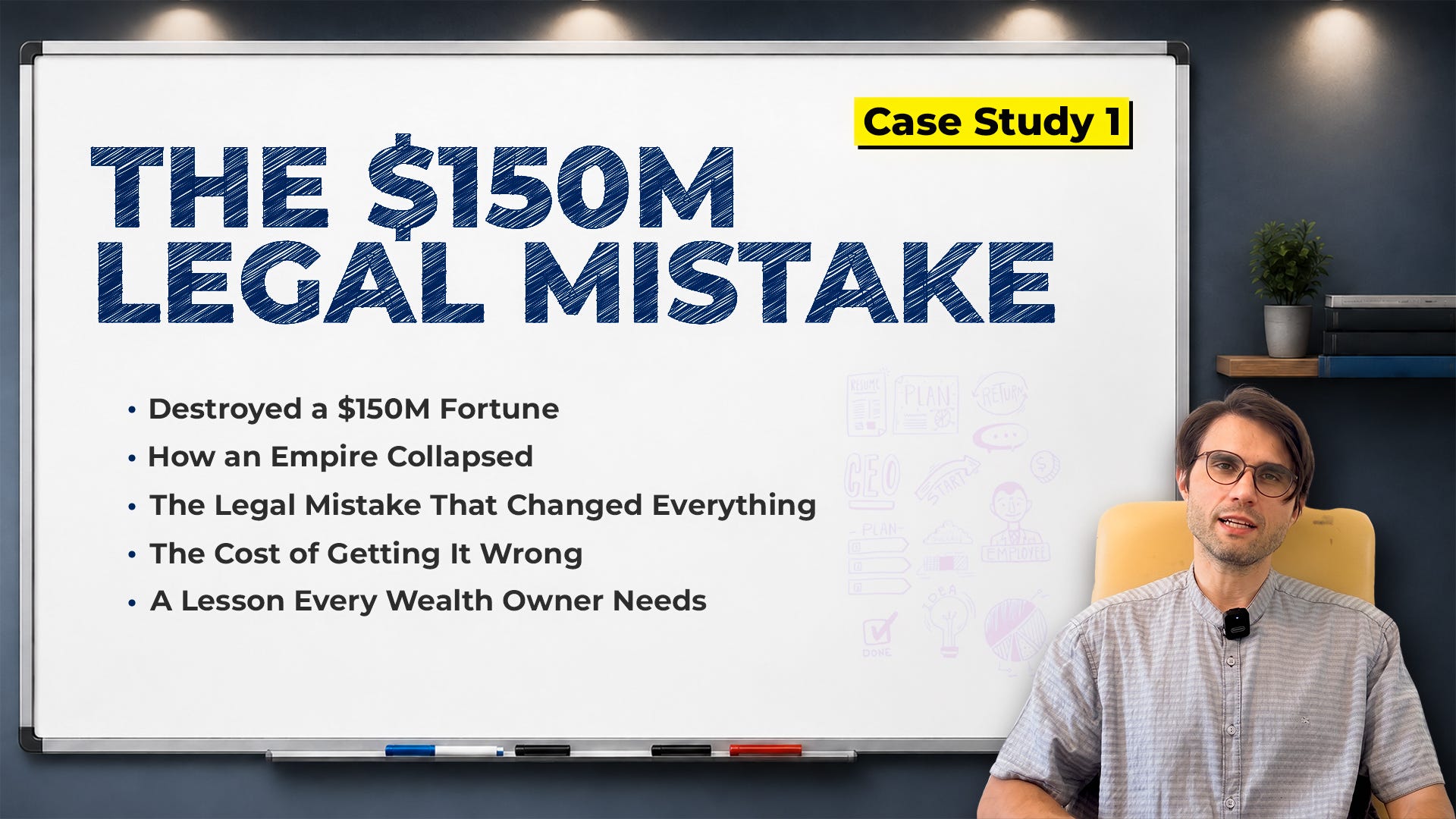
Eric Jury: How One Legal Blind Spot Destroyed a $150 Million Fortune

Continue your learning
Take the free FREE Legal Risk Quiz to identify the blind spots that could threaten your assets and wealth.
The Risk Hidden Behind Wealth
Eric Jury built a highly successful property business.
For years, the business expanded. Assets grew. Opportunities increased. The kind of growth many dream about.
But his story teaches one of the most important principles in wealth preservation:
A business can succeed for years and still be vulnerable if the legal structure behind the growth is not carefully understood.
Many successful business owners think about debt in a simple way:
“The company borrowed the money.”
“The company owns the assets.”
“The company carries the risk.”
That is often the purpose of using a company structure. The company is designed to separate the business risk from personal wealth.
But that separation only works if the documents actually maintain that boundary.
One of the most important examples is a personal guarantee.
A personal guarantee changes the risk equation.
Instead of the lender only having a claim against the company, the lender may also have a direct claim against the individual behind the company.
The company wall may still exist legally, but the guarantee creates a doorway through it.
This is where many successful people misunderstand risk.
The danger is not always obvious when everything is working.
When asset values are rising, debt is available, and the business is expanding, guarantees can feel like administrative paperwork.
They are not.
They are legal commitments that may survive long after the original business decision was made.
Eric Jury’s story shows how quickly circumstances can change.
A successful property business can become a distressed situation when markets turn, financing tightens, and lenders begin enforcing their rights.
This is the key lesson for anyone who has built significant wealth.
Debt itself is not the problem. Debt is one of the most powerful tools available for creating wealth.
The problem is failing to understand:
where the risk sits;
who is personally exposed;
what obligations have been accepted;
and what happens if the business cannot perform.
Before signing major financing documents, ask:
Is this obligation limited to the company?
Have I personally guaranteed anything?
What assets are exposed if things go wrong?
Does my structure protect the wealth I have already created?
Creating wealth requires ambition. Preserving wealth requires legal understanding.
The people who understand the documents behind their success are the ones best positioned to keep it.